Therapy is an investment in you, your relationships, and your future.
That being said, the amount that is considered an investment can vary significantly from person to person.
It is a commitment of mine to accommodate a variety of circumstances, which is why I offer sliding scale pricing.
I invite you to consider what amount would feel like a sustainable investment to you — one that you notice, but not one that feels like a hardship.
I operate on an honor system and trust you to determine which fee range is appropriate for you.
My Sliding Scale Options
Below Market Rate
$100-180
This rate is for people making ends meet. If you are supporting loved ones, carry debt that impacts financial flexibility, or if you come from communities that have been excluded from a fair wage or access to building wealth, this could be the rate for you.
Market Rate
$185
This rate reflects the actual current cost of my work based on my experience, training, and my needs as a human. This may be the rate for you if you are financially stable and/or if neither the below nor above market rates are appropriate.
Above Market Rate
$190-225
This might also be called the “Pay-It-Forward” rate. If you make $125k or more per year, have access to inherited wealth, and/or are otherwise in a state of financial abundance, I invite you to pay this rate, which allows me to sustain a wider sliding scale.
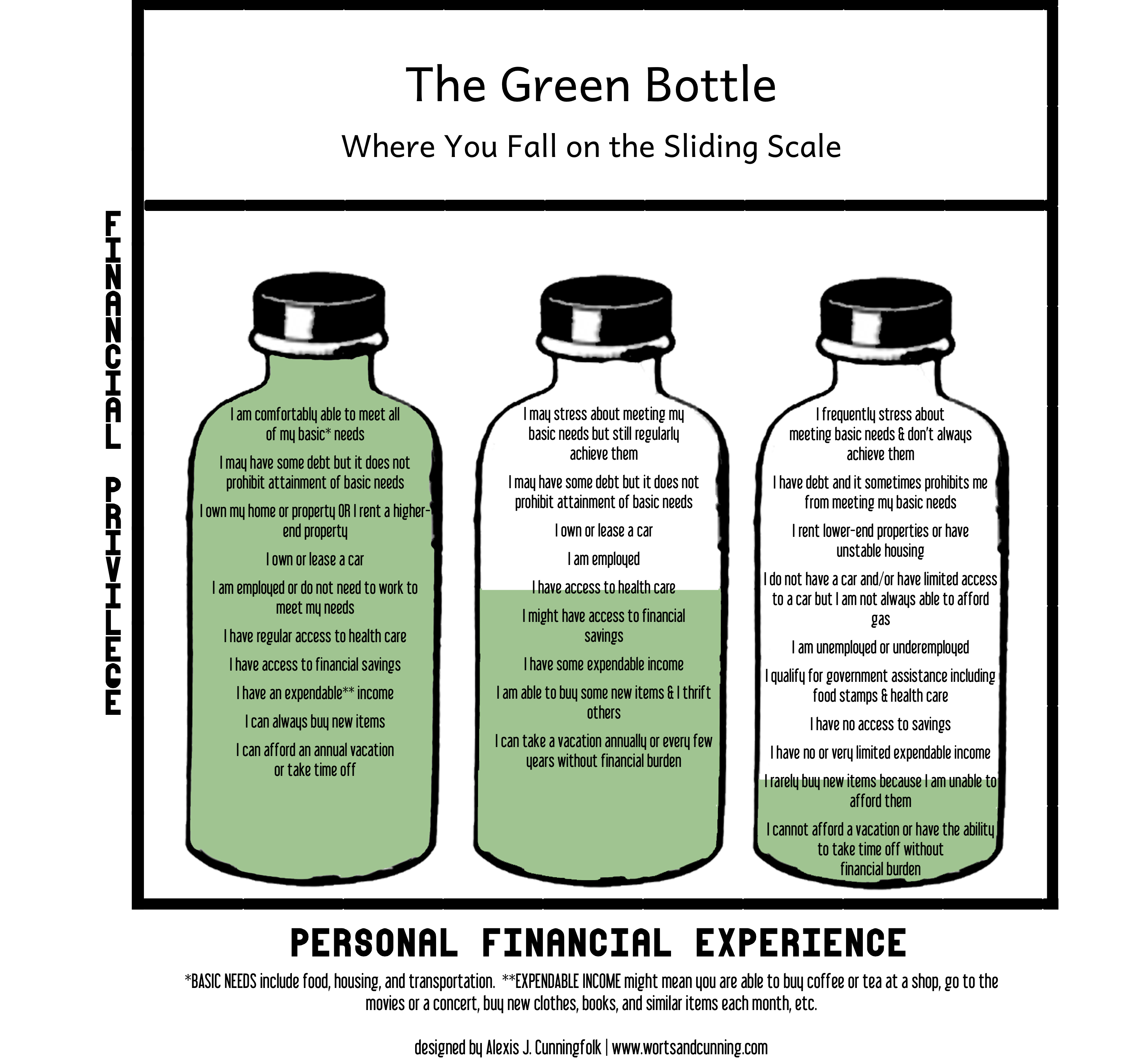
For help locating yourself on my sliding scale, check out this infographic (the left most bottle represents my market-rate or even above market-rate prices).
Can I use insurance to pay for our sessions?
I am not currently in-network with insurance companies, and would be considered an out of network provider. You can contact your insurance company directly and find out your coverage for “out of network” behavioral health benefits. You can also use this handy out-of-network benefits calculator. Just use my NPI number: 1568743631
How do you set your fees?
Challenging capitalism is a value of mine, both as a person and as a therapist. As a self-employed business owner, this means I need to figure out how to participate in commerce without acting like a capitalist. I base my fee on my experience in the field, cost of living, and my current financial needs and goals. Some of these are:
- To access my own health insurance
- To care for my long-term health as someone with chronic illness
- To prepare for retirement and long term care
- To have access to time off for medical, personal, and leisure reasons
- To pay off my student loan debt that I accrued to become a therapist
- To participate in my community in intentional & meaningful ways
- To make regular wealth re-distribution and reparations to Black & Indigenous people part of my business model
Good Faith Estimates
You have a right to receive a Good Faith Estimate for the total expected cost of any non-emergency items or services. Make sure your health care provider gives you a Good Faith Estimate in writing at least 1 business day before your medical service or item. You can also ask your health care provider, and any other provider you choose, for a Good Faith Estimate before you schedule a session.
I Like your sliding scale model, where does it come from?
Thank you to the following people and organizations for providing and/or inspiring the language and structure of my sliding scale: Kelly Reed, LMHC, Silvana Espinoza, Alexis J. Cunningfolk of Warts + Cunning Apothecary, Dr. Jennifer Mullan of Decolonizing Therapy, and The Inclusive Therapists Network.